By Capital Cardiac Care
Heart health is not static—it changes moment by moment. For patients with known or suspected heart conditions, continuous monitoring can be the difference between early intervention and missed warning signs. Cardiac telemetry is a powerful, non-invasive technology that allows clinicians to monitor heart rhythms in real time, helping ensure timely, accurate, and life-saving care.
At Capital Cardiac Care, we specialize in advanced cardiac monitoring solutions designed to improve patient outcomes, enhance comfort, and provide clinicians with actionable insights—wherever the patient may be.
What Is Cardiac Telemetry?
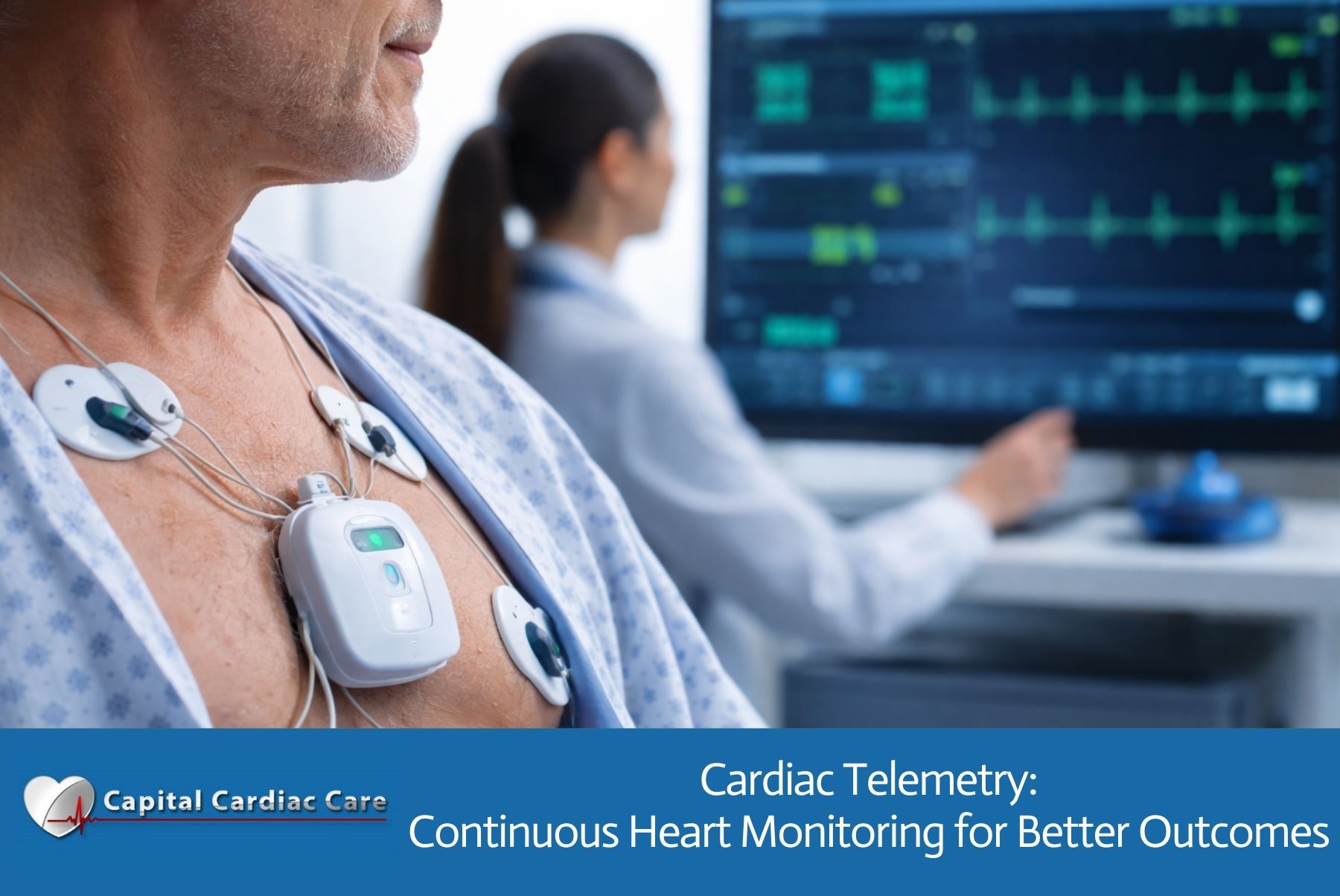
Cardiac telemetry is a method of continuous heart rhythm monitoring using wearable sensors that transmit data wirelessly to trained medical professionals. Unlike a standard electrocardiogram (ECG or EKG), which captures a brief snapshot of heart activity, telemetry provides ongoing, real-time data over hours or days.
This technology is commonly used for patients who:
- Have experienced cardiac symptoms such as palpitations, dizziness, or fainting
- Are recovering from a cardiac event or procedure
- Have known arrhythmias or are at risk for developing them
- Require close monitoring without being confined to a hospital bed
How Cardiac Telemetry Works
Cardiac telemetry systems typically include:
- Small electrodes or sensors placed on the patient’s chest
- A portable transmitter worn discreetly on the body
- A secure wireless connection that sends data to a monitoring center
- Trained cardiac technicians and clinicians who review the data continuously
If an abnormal heart rhythm is detected, the care team can be alerted immediately, allowing for rapid clinical decision-making.
Benefits of Cardiac Telemetry
Continuous, Real-Time Monitoring
Telemetry provides round-the-clock insight into heart activity, capturing intermittent or unpredictable events that traditional tests may miss.
Early Detection of Abnormalities
Irregular heart rhythms such as atrial fibrillation, bradycardia, or tachycardia can be identified quickly—often before symptoms worsen.
Increased Patient Mobility and Comfort
Many telemetry solutions allow patients to move freely and continue daily activities while being monitored.
Improved Clinical Outcomes
Early intervention leads to better treatment decisions, fewer complications, and reduced hospital readmissions.
Who Can Benefit from Cardiac Telemetry?
Cardiac telemetry may be recommended for:
- Patients with arrhythmias or suspected arrhythmias
- Post-operative cardiac patients
- Individuals with unexplained syncope (fainting)
- Patients starting or adjusting cardiac medications
- High-risk patients needing close observation
Your healthcare provider can determine whether telemetry monitoring is appropriate based on your symptoms and medical history.
Cardiac Telemetry at Capital Cardiac Care
At Capital Cardiac Care, we combine cutting-edge technology with compassionate, patient-centered care. Our cardiac telemetry services are designed to be:
- Accurate – Utilizing advanced monitoring technology
- Responsive – Backed by experienced cardiac professionals
- Convenient – Supporting patient comfort and mobility
- Secure – Ensuring patient data privacy and compliance
We work closely with physicians, hospitals, and care teams to deliver timely insights that support confident clinical decisions.
Frequently Asked Questions (Q&A)
What is the difference between cardiac telemetry and a Holter monitor?
A Holter monitor records heart activity for a set period (usually 24–48 hours) and is reviewed after completion. Cardiac telemetry, on the other hand, provides real-time monitoring, allowing immediate response to dangerous rhythm changes.
Is cardiac telemetry safe?
Yes. Cardiac telemetry is non-invasive, painless, and widely used in both inpatient and outpatient settings.
Can I move around while on telemetry?
In most cases, yes. Many modern telemetry systems are portable and allow patients to walk, rest, and perform daily activities.
How long does telemetry monitoring last?
Monitoring duration varies depending on clinical need—it may last hours, days, or longer as determined by a physician.
Who monitors the telemetry data?
Data is monitored by trained cardiac technicians and clinicians who can escalate concerns to the appropriate healthcare provider.
Does cardiac telemetry replace hospital care?
Telemetry does not replace medical care but enhances it by providing continuous insight. Any concerning findings are communicated promptly to the care team.
Contact Information
Capital Cardiac Care
📞 Phone: (301) 569-7135
🌐 Website: https://capitalcardiaccare.com
Office Locations
Gaithersburg Office
818 West Diamond Avenue, Suite 240
Gaithersburg, MD 20878
Columbia Office
6230 Old Dobbin Lane, Suite 250
Columbia, MD 21045
For referrals, consultations, or more information about our cardiac telemetry services, please contact our team.