By Capital Cardiac Care
Heart health is essential to overall wellness, and advanced diagnostic tools play a vital role in detecting cardiovascular disease early. One such tool is the nuclear stress test, a highly effective imaging study that helps cardiologists evaluate blood flow to the heart muscle during rest and physical stress.
At Capital Cardiac Care, we use nuclear stress testing to identify coronary artery disease, assess symptoms such as chest pain or shortness of breath, and guide personalized treatment plans. Below, we explain how nuclear stress tests work, who needs them, and what patients can expect before, during, and after the procedure.
What Is a Nuclear Stress Test?
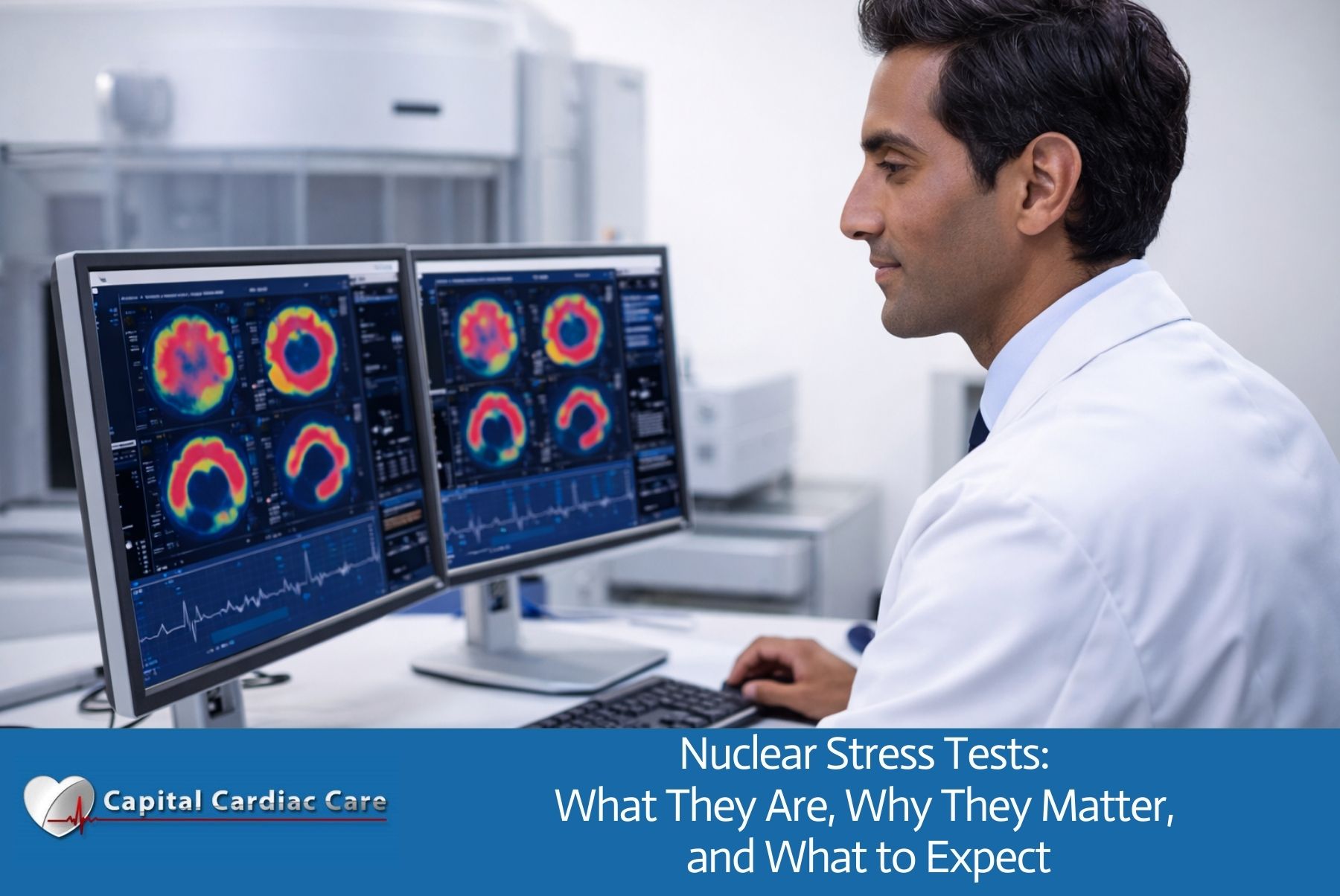
A nuclear stress test is a specialized cardiac imaging procedure that shows how well blood flows to the heart muscle at rest and during stress (exercise or medication-induced). A small amount of radioactive tracer is injected into the bloodstream, allowing advanced imaging equipment to create detailed pictures of the heart.
By comparing images taken at rest and under stress, cardiologists can determine whether certain areas of the heart are receiving enough blood.
Why Nuclear Stress Tests Are Important
Nuclear stress tests help physicians:
- Detect coronary artery disease (CAD)
- Identify blockages or narrowed arteries
- Evaluate unexplained chest pain, fatigue, or shortness of breath
- Assess heart function after a heart attack or cardiac procedure
- Determine the effectiveness of current cardiac treatments
- Guide decisions regarding angioplasty, stenting, or surgery
This test is especially useful for patients who may not show abnormalities on a standard EKG or treadmill test alone.
Who May Need a Nuclear Stress Test?
Your provider at Capital Cardiac Care may recommend a nuclear stress test if you:
- Have symptoms suggestive of heart disease
- Have risk factors such as diabetes, high blood pressure, high cholesterol, or a family history of heart disease
- Are unable to exercise adequately for a traditional stress test
- Have abnormal results on other heart tests
- Need evaluation before or after a cardiac intervention
What to Expect During a Nuclear Stress Test
1. Preparation
You may be asked to:
- Avoid caffeine for 24 hours
- Fast for several hours before the test
- Temporarily stop certain medications (as directed by your provider)
2. Resting Images
A small amount of radioactive tracer is injected, and images of your heart are taken while you are at rest.
3. Stress Phase
You will either:
- Walk on a treadmill, or
- Receive medication that simulates exercise by increasing blood flow to the heart
Once your heart reaches the target stress level, additional tracer is administered.
4. Stress Images
More images are taken to evaluate how blood flows to your heart during stress.
The entire test typically takes 2–4 hours, depending on the protocol used.
Is a Nuclear Stress Test Safe?
Yes. Nuclear stress tests are widely used and considered very safe. The amount of radiation exposure is low and carefully controlled. Our team at Capital Cardiac Care follows strict safety protocols to ensure patient comfort and well-being throughout the procedure.
Comprehensive Q&A: Nuclear Stress Tests
Q: Does the test hurt?
A: No. You may feel a brief needle stick during the injection, but the test itself is painless.
Q: How long does the radioactive tracer stay in my body?
A: The tracer naturally leaves your body within 24–48 hours, mostly through urine.
Q: Can I drive myself home afterward?
A: Yes. Most patients can resume normal activities the same day unless otherwise instructed.
Q: What if I can’t walk on a treadmill?
A: That’s not a problem. Medication-based stress testing is available and equally effective.
Q: How accurate is a nuclear stress test?
A: Nuclear stress tests are highly accurate and provide more detailed information than standard stress tests alone.
Q: When will I get my results?
A: Results are typically reviewed by your cardiologist and discussed with you within a few days.
Q: Are there side effects?
A: Side effects are uncommon but may include temporary flushing, headache, or mild shortness of breath during the stress portion.
Why Choose Capital Cardiac Care?
At Capital Cardiac Care, we combine advanced diagnostic technology with compassionate, personalized care. Our experienced cardiology team is dedicated to early detection, accurate diagnosis, and evidence-based treatment to help patients achieve optimal heart health.
Contact Information
Capital Cardiac Care
📞 Phone: (301) 569-7135
🌐 Website: https://capitalcardiaccare.com
Office Locations
Gaithersburg Office
818 West Diamond Avenue, Suite 240
Gaithersburg, MD 20878
Columbia Office
6230 Old Dobbin Lane, Suite 250
Columbia, MD 21045
Please contact our office to schedule an appointment or to learn more about nuclear stress testing and other cardiac services.